Showing posts with label Reviews_Museum_Aquarium_Garden. Show all posts

Saturday, July 21, 2012

Homosassa springs wildlife state park

Homosassa Springs is not your typical state park.  Unlike most state parks there are very few hiking trails... but there are a lot of animals.  Homosassa serves more as a nature center, where they accept injured animals that cannot be released back into the wild and display them.  So most of the animals there are native to the florida region.

They had reptiles and mammals; like alligators, snakes, red foxes, cougars, and bobcats.


They also had a variety of birds, including several species of owls and hawks.  They had just opened a new exhibit, a walk-in aviary, when we went.  This exhibit featured many shorebirds like ospreys, herons, and my new obsession, the spoonbill.  This was very much my favorite part of the park.


The start of the Homosassa river was located on the grounds of the park, a lovely spring which turned the waters all shades of blue and green and kept the water temperatures at 72 degrees (22 degrees Celsius) year round.


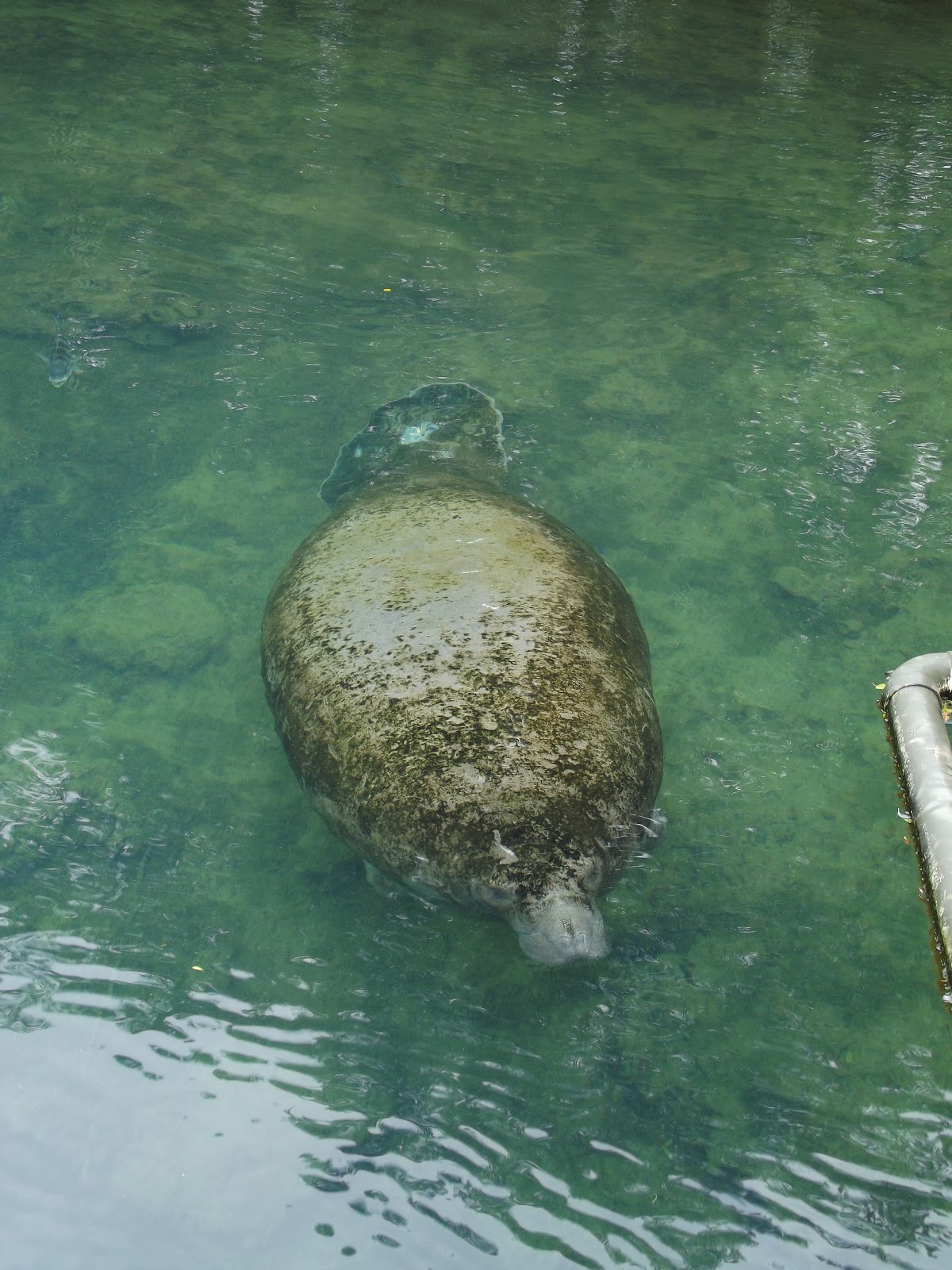
Of course, the park's most notable residents were found in the spring... the manatees.  These manatees were non-releasable, and so could not swim out of their paddock, but plenty of their wild relatives can be seen in the lower river and near-by Crystal River, especially during the winter.


Not all of the wildlife was there to be rehabilitated.  Some of them were just there to pick up some free food.  This Great Blue Heron joined the pelicans for feeding time, and then promptly flew off.


There were almost hourly talks being given at various spots in the park, so there was always something to check out.  For the most part, the talks were interesting and informative, and tended to coincide with feeding time for that particular animal.  My one regret was the very last talk we went to, where the presenter didn't show proper respect for the baby alligator he was handling.  That was very distressing to watch, but may be a bug for that particular presenter and not the others as a whole.

So, if you're looking for a place to go hiking and possibly get a glimpse of animals in the wild, Homosassa may not be the place for you. But if you're in the mood for a zoo-like atmosphere and a chance to see some of the native animals up close and personal, this is a good place to go.

Sunday, July 8, 2012

Florida Caverns State Park

Today we went to visit the Florida Cavern State Park.  It is home to one of the only "tour caves" in the Florida.  To be honest, after being at Carlsbad, I was not expecting much.  Perhaps a small cave with one or two formation.  I was pleasantly surprised at what I got though.  The tour lasted ~45 minutes more or less, and we went through at least 6 "rooms".  In each was a wide array of formations, all the ones I love...  Columns, draperies, soda straws, etc. 

The waterfall room

Some draperies in the entrance room

The caves themselves were full of interesting reminders of Florida's geological history.  The ceilings in most of the rooms boosted tons of fossils; mostly clam shells, but our guide pointed out a shark tooth and a nautiliod shell.

Sea urchin test and clam shell on the cave ceilings

We also were lucky enough to see some cave life, including a bat.  After the cave tour there was still plenty to see, so we went off on one of the most recommended hikes, the flood plain/ tunnel trail.  It was interesting to see the different habitats in the area.  Just outside the cave exit, the cool cave air allowed for these liverworts and mosses the thrive.

A snail active at noon, made possible by cool air blowing out of the cave

There were pockets of limestone and mini cave openings everywhere, but the flatter parts (the flood plains) had all the hallmarks of a cypress swamp.  There were columbine plants everywhere, and I made a resolution to come back in the spring to see all the wildflowers blooming.  From the pictures in the visitor center, it looks amazing!

On the bluffs, it's all hardwood forest

There was also a lot of wildlife.   Being Florida, a lot of it was bugs.  We saw beetles, golden orb weaver spiders, golden silk spider (BIG), spiny orb weavers, and a new one for me, harvestman.  As a matter of fact, when I stopped to take a picture of a beetle, a cool-looking true bug landed on me.  There were tons of butterflies near the flower field in front of the visitor center.  I counted at least four different species in five minutes.

Harvestman

There was also some reptiles out and about, including a bunch of five-lined skink young.  There were a couple of adults out as well, but they aren't as colorful.

This little one caught a bug

All and all a must see stop in the North Florida region... Like most state parks, getting in is fairly reasonable, $5.00 for a car of up to 8.  The cave tour itself costs extra, but at $8.00 for an adult, it is still pretty modest.  I will be going back again, for sure!

Saturday, October 22, 2011

St. Marks Wildlife Preserve


Today I went to St. Marks for their Monarch butterfly festival. They were tagging butterflies that use the preserve as a stop over for their migration to Mexico.


There were quite s few pollinators out... Like this Gulf Fritillary and bee friend.

And Buckeye butterfly...

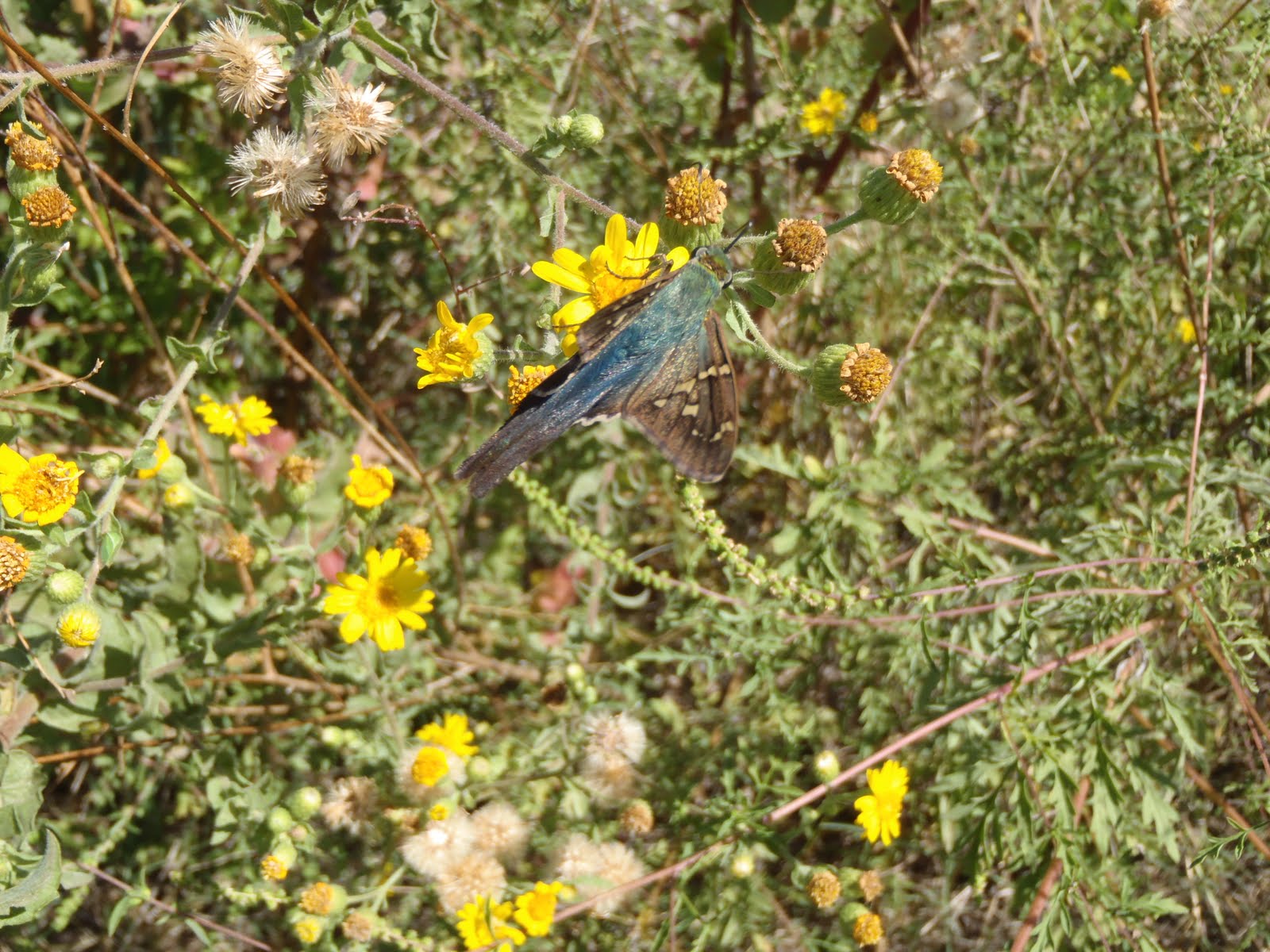
I was fascinated by this plain-looking butterfly called a long-tailed skipper. It looks pretty dull from the side...

But the back are beautiful and delicate shades of blue and green

There were also plenty of birds about... like this mocking bird.

And crazy-looking caterpillars. If you look closely, it's back end has a false head for the birds to eat.

All around was nature in action... like these dragonflies mating.


And this mantis taking advantage of the bounty of butterflies!

All and all a great place to go if you are into birds, bugs, or flowers... I will definitely return. To see what's new and maybe get a glimpse of the illusive spoonbill!

Sunday, September 11, 2011

Leon Sinks State Park

Today I went to Leon Sinks State Park. It is part of a larger park, but is an area where there are some sink holes. Basically the entire area is made of limestone and there is an extensive aquifer under the ground. As rain water and the ground water eat away at the limestone, sink holes form. Some of the "sink holes" were fairly unimpressive, as they were just places where the ground was lower than the surrounding area, but a few were very sharp. The most impressive was the big dismal, which had a sharp drop of 100 feet, to water which was also 100 feet deep.

There was also some swamps in the area. But unlike the wet sinks, they were mostly dry. The forest itself was dry and a lot of the foliage was turning brown. However, we still got glimpses of some beautiful flowers hidden here and there.

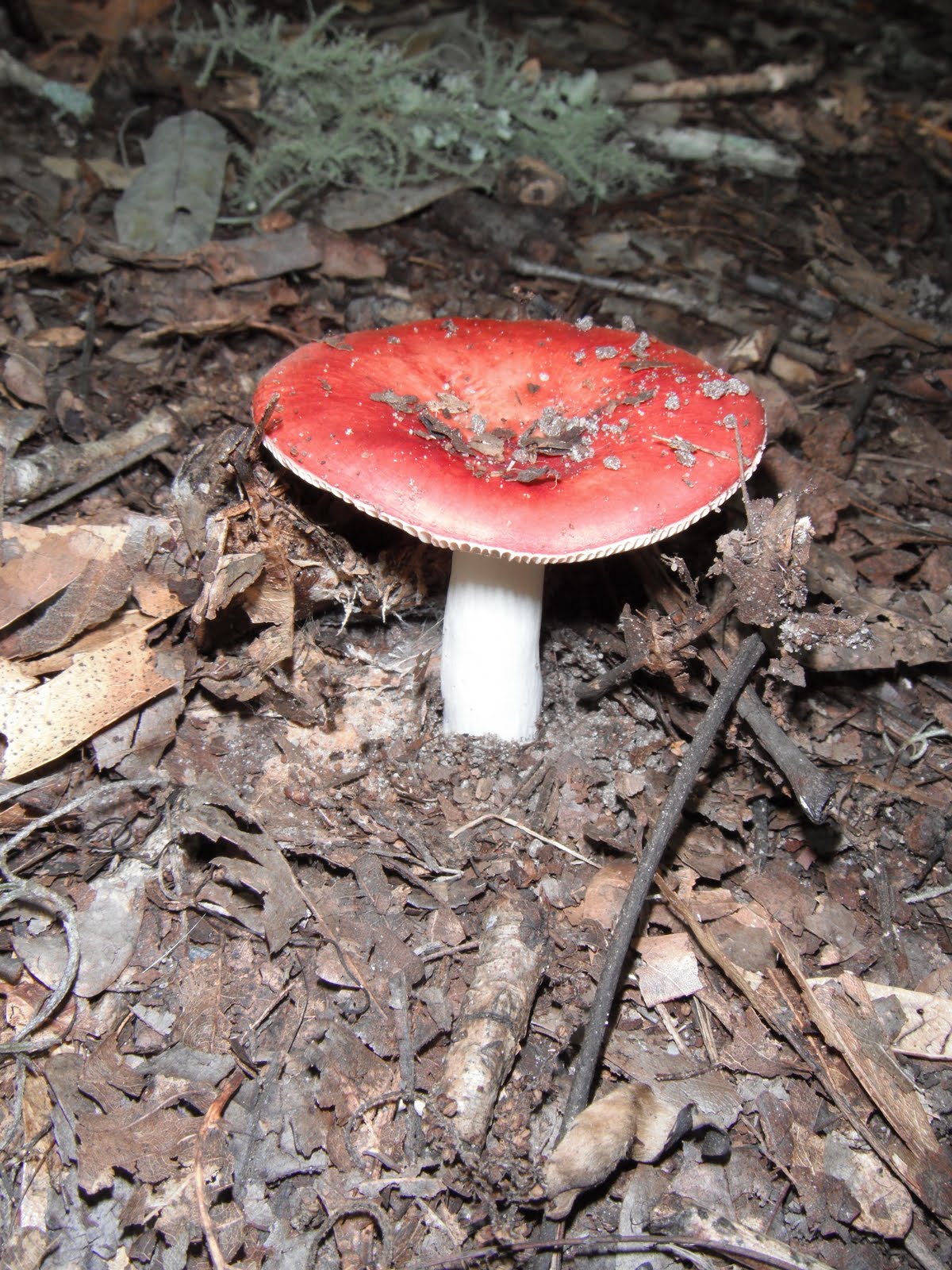
There were also a surprising number of mushrooms about especially given how dry it was. This one looked awesome, it may be a Russula pulchra.

There was also this crazy-looking batch of mushrooms which I am fairly sure are earthstars, or some other puffball type mushrooms. These explode spores out through the top of their body when they get ripe enough. The white ones are unexploded, and the brown one has already released its spores. Probably the best thing that I saw in the park!

Of course what I've learned about Florida is that it is all bugs, and things that eat bugs. We saw our fair share of dragonflies, bees, gnats, and a lot of grasshoppers. We also saw this Golden Orb Weaver, which I had originally seen in the LA Natural History Museum's spider pavilion. It was definitely something to see it in the wild! I though it was from some far away country like Malaysia.

We also saw these awesome beetles. They were quite large, about the size of my thumb, or a little smaller.

The biggest find of the day was this beautiful five lined skink. We saw it near the big dismal sink, where it was hanging out inside the tree.

Of course, I nearly had a heart attack when a big group of people stomped by and scared it away before I could get a picture... But a little patience and it came back again and I got the shot!

Monday, August 15, 2011

Florida Museum of Natural History

I went to the Florida Museum of Natural History not knowing quite what to expect. On one hand, the website was very well managed and made it look like a decent-sized museum with all the trimmings. On the other hand, I knew it was part of the University of Florida campus, and many other campus 'museums' are generally one room affairs with minimal signage and virtually no learning opportunities.

I was happy to learn that the museum lived up to the website's promises more than my expectations of a campus museum. It is housed in its own building, surrounded by a couple of art museums in the corner of campus. It had three main exhibits, a Florida fossil exhibit, peoples of Florida, and a rotating exhibit which happened to be on canoes. There was also a discovery center for the kids and another hands on display about 'wild music'. As the wild music cost extra and there was a day camp in the discovery center, I did not hit either of these two sites.

The Florida's Fossils section was well laid out, first taking you through a series of picture timelines showing generally what flora and fauna dominated which era, then you got to get an idea of what animals could be found in Florida by viewing the fossils. Each animal plaque was topped with a miniature bronze statue depicting how the animal would have looked in life, making it easy to pick out the animals you want to read more about and compare the skeleton to the fleshed-out version.


There was an amazing giant sloth, much larger than anything I had seen at the Page museum, and a glyptodont (a giant armadillo-like creature), which I absolutely adore!


I also learned that there were many cats found in the Florida region including American Lions [err... I mean Jaguars], the smaller precursor to the saber-tooth cat found in CA, Dirk-toothed cats, and Nimravids. Nimravids look just like dirk tooth cats but one of the bones in their skull (the post-orbital process) is solid, unlike 'true' cats.


The peoples of Florida exhibit was a little more chaotic. This could have been due to the fact that we may have entered it backwards, but since we could not tell for sure... well, I guess that was part of the problem. Either way, in the middle of the exhibit there was a corridor filled with larger than life models of common sea animals of Florida.

It was very fun, and I think I may have spotted my future research animal there... I was confused as to why this exhibit was in the middle of a hall devoted to the peoples of Florida, though.

The rest of the hall focused on some of the main native groups of Florida. The Seminoles were one group, and the other was a group called the Calusa. The Calusa lived in southern Florida and were excellent wood workers. Their wood carvings and art really impressed me. I loved their style.


In addition to the main building, we also went to the butterfly rainforest, which costs extra, but was so worth it. The butterfly rainforest, unlike many other butterfly pavilions was a permanent display, and because of that, the habitat was wonderfully lush.

There were many different types of butterflies... all fluttering around.


My biggest gripe was that there was no good guide for them. They had some hand held deals which did not even have a 4th of the butterflies picture on them. Their website has an excellent guide, however, so I was able to id these beauties after the fact fairly easily.

In addition to butterflies, they also had some birds flying about, like this orange weaver finch... which made Carlos happy. It's definitely a beautiful place to sit and watch. Since the entrance to the main halls were free, I felt okay spending the cash to get into the butterfly rainforest and I am glad I did!

All and all a good place to go and see some things unique to the Florida area. You can decide what you want to see based on what you want to pay for. They also have discounts for Florida residents and students (but only Florida college students).

Monday, April 11, 2011

Mohave National Preserve

So we went on a trip to the Mohave natural preserve, with the idea that we were going to see Mitchell caverns, the only limestone cavern in the CA park system. Based on some of the pictures it looked like a mini Carlsbad cavern, so I was very excited. Of course, the first thing to greet us after the four hour drive was this...


The caverns had been closed since December of last year for 'maintenance', supposedly to re-open in October... So we decided to drive around and see what else there was to offer, hoping to see some neat fossils that we had heard might be around the area.

There was a nice stand of Joshua trees on our drive...


and some other nice pockets of desert flora...


After a confusing talk with the rangers at Kelso station, we (and the rangers) finally learned where the fossil sponges were located, from their on-call geologist. While not much to look at, it was still something that I had never seen.


There was also some evidence of modern life too...


And of course, the Kelso dunes themselves...


All and all an okay trip. I was definitely disappointed about the caves, and would have planned a trip to Joshua Tree National Park instead if I had known ahead of time. What was really nice about the trip was the people. The rangers were very willing to chat, and helps us find places to see, or places that were at least open...

Sunday, April 5, 2009

Anza Borrego State Park adventure


Right now the deserts are blooming. I wanted to see this phenomenon for myself, so I packed up and headed for Anza Borrego. We had two goals; to see some flowers (I wanted to see cactus blooms) and to see some fossils.

We first headed to the mud hills area where there are Pliocene oyster fossil beds. This area is rather crazy looking as there are very large hills of dried mud all over the place. These hills are studded with gypsum, making them sparkle in the sunlight as if they were studded with palm-sized mirrors.


We followed a wash, a narrow path that had been carved out by sudden rushes of water, in order to reach our destination; the elephant knees and the oyster beds.
Along the sides of the wash was the only signs of green plant-life in the mud hills area. There were sage-like bushes, but most of the plants were as small as the size of your hand. Flowers were small and low to the ground, most likely pollinated by wind or ants. There was a beautiful plant with brilliant purple flowers, which was my favorite for the whole trip, as the flowers were so delicate looking, yet it was growing in such a harsh environment.


When we got closer to the elephant knees, we noticed that the top of the mesa and on three nearby formations there were a dark layer on top about 2 feet thick. When we hiked up the side, we saw that it was completely made of small shells and parts of shells. We could not find the oysters the size of dinner plates, but we did see a rather large piece of a fossil oyster. So goal 1 was accomplished.


Afterwards we headed back towards the center of the park where there was more green life.

Here we went on cactus loop trail, where there were several kinds of cactus and other plants in bloom. On the cactus side, there were beaver tail and hedgehog cactus which had magenta flowers, and barrel cactus which had yellow-green flowers.

There were also jumping chollas, which had green flowers. These cactus have a habit of breaking off their arms and hitching a ride on a passer-by, thus 'jumping' to a new area.

There were also some fantastic ocotillo plants in bloom, which I've been strangely attracted to since I fist saw them on a trip to Arizona. They have thorny stems, and only produce small leaves and large flowers after the rains. The flowers were these bright red spikes on the top of the plant (the first picture is of these beautiful plants).

After our cactus hike, we headed to the visitor center and palm canyon to see if we could spot the big horn sheep which are said to roam the park. Although this unplanned goal was thwarted, we did get to see a variety of wild life that did not leave us disappointed. In just the canyon, we saw tons of lizards, quail, ravens, and endangered desert pup fish in a man-made habitat. In mud hills, we saw tons of butterflies, lizards, and a cute beetle. On our way into the park, we even spotted a coyote crossing the road. All and all, an amazing experience!