So I went on a trip to sample some of the sea life found around Catalina Island this past weekend. In the deeper parts we found some hag fish, which produce copious amounts of slime with the slightest provocation. The slime has microfibers in it and makes it particularly strong.

We were also lucky enough to get a deep sea octopus. This one might be a big-eye octopus, as it lacks the spots of a two-spot octo, and was caught in very deep water.

This trip was filled with all sorts of cool mollusks, like this very large black sea hare. It was probably around 13 pounds. We caught about three of these beauties. The black sea hare is the largest gastropod in the world! Luckily for me, it does not ink.

We also got a lovely navanax. The navanax is a predatory snail that follows the slime trails of other snails then swallows them whole. After digesting them, it will spit out the cleaned out shell.

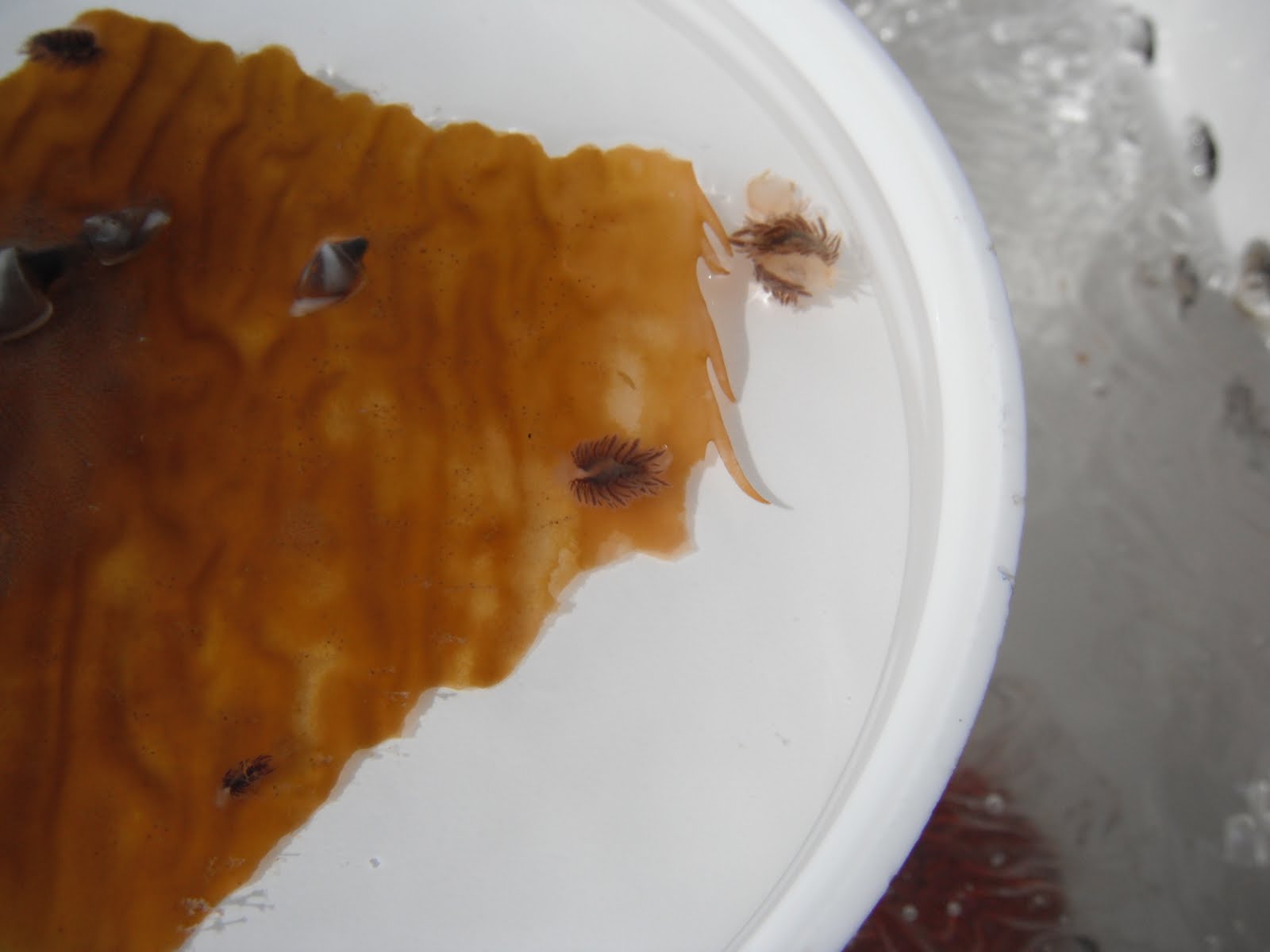
We also found a couple of different types of nudibranchs. The ones pictured below are pelagic nudibranchs and are commonly found on drift wood or drift kelp. Their color depends on what they eat, with brownish individuals dining one pelagic barnacles (also in the photo) and purplish ones dining on the by the wind sailor.

We did not have any luck chumming for blue sharks this year, but we were very lucky to see this crazy critter come by our boat. Yes my favorite fish ever, the mola (or ocean sunfish) swam near our boat. Judging from the size of the fin sticking out of the water, this beauty was huge! It made my trip!

We also were lucky enough to see a variety of marine mammals. These pictured below were Risso's dolphins, the largest dolphin in our area. We also saw bottle-nose and pacific white-sided dolphins.