Monday, June 25, 2012

Jumping spiders


This is a woodland jumping spider, Thiodina sylvana.  They are members of the family Salticidae, which contains all of the jumping spiders and is the largest spider family.  Like all spiders, these little guy have eight eyes, but their eye arrangement is slightly different then other spiders.  Their eyes are in a single row around their head, with two large eyes right in the middle.  Those eyes have a movable retina, and are able to focus very well, but have a very narrow field of view.  They also posses 4 different photoreceptive layers which each focus at a slightly different plane.  By comparing the focus of the different colors against the perfectly-focused deep layer, they can get a sense of how far an object is away from them [1].

They use this knowledge to stalk their prey and jump out at them.  As their name implies they are superb jumpers and can jump up to 30 times their body length.  That would be like a human jumping 180 feet (or 54 meters)!  They often attach a dragline before jumping, just in case they miscalculate.

This spider is preparing to jump up to the leaf above it.
They also have a fairly complex courtship, with males displaying different colors on their body, including UV patches, and producing sounds to entice the female to mate with them [2.3].  Several sources seem to imply that there is a color-based sexual dimorphism in this species, with the females being lighter in color then the males.

Male woodland jumping spider?
Since these pictures were taken on the same plant, and the lighter markings were the same, I'm inclined to agree that this was a male female pairing.  Enjoy some video of these guys in acton... and in the second clip, look for the dragline as the male jumps down stalks his prey.


Sunday, December 4, 2011

Mysterys and metamorphosis

I am being more and more drawn to the mysterious bug world that seems to be invading my life. Now I can experience the thrill of invertebrates on land! When I noticed this strange bug the other day I was completely taken aback. I could not figure out even what kind of bug this could possibly be. I suspected that it might be something larval, as I saw a few shed exoskeletons which might have been the same thing. But still, what was it? Not a caterpillar that was for sure. It had six legs, so it must be an insect... not a spider. But no wings? Hum...

To top it off, I noticed yet another strange bug near by. It looked like it might have been a beetle, but there was no hardened wing coverings and the abdomen was just to darn long. And what was with those crazy 'feet' at the end of the abdomen?

Puzzled I took some photos and went on my way, thinking I would never know for sure. I tried some searches for my mystery bug number one, and thought it might be some kind of mealy bug, but I was not totally convinced.

So a few days pass, and I go out to my plants where mystery bug number two is hanging out and low and behold I see a new bug, this one fairly recognizable:

Well, well a ladybug hanging out where mystery bug number two is... Maybe mystery bug number two is a larval form of the lady bug. They are the same color, and you can see the spots starting to form. So I do a little searching and find out that this lady bug is Harmonia axyridis, an asian ladybug. Lucky for me, I also get to solve the identity of mystery bug number two AND number one.

As I suspected, mystery bug number two is a pupal form; of the asian ladybug. Number one is the larva of that same individual. What I took for 'feet' was actually the discarded molt of the larva at the end of the pupa. Metamorphosis is so cool... but I can imagine that it drove early entomologists up the wall trying to identify things, much like it drives us plankton-lovers up a wall!

Saturday, October 22, 2011

St. Marks Wildlife Preserve


Today I went to St. Marks for their Monarch butterfly festival. They were tagging butterflies that use the preserve as a stop over for their migration to Mexico.


There were quite s few pollinators out... Like this Gulf Fritillary and bee friend.

And Buckeye butterfly...

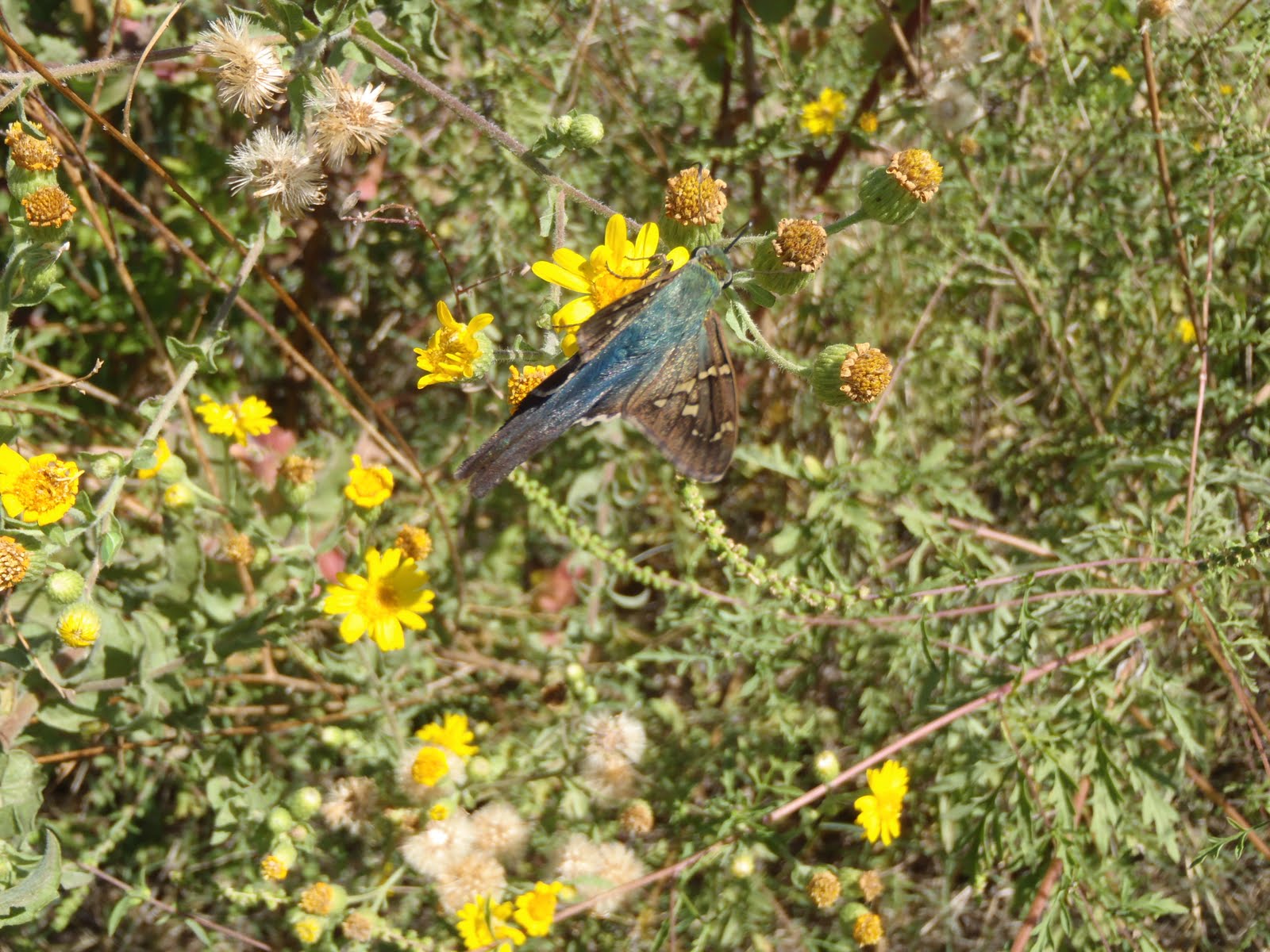
I was fascinated by this plain-looking butterfly called a long-tailed skipper. It looks pretty dull from the side...

But the back are beautiful and delicate shades of blue and green

There were also plenty of birds about... like this mocking bird.

And crazy-looking caterpillars. If you look closely, it's back end has a false head for the birds to eat.

All around was nature in action... like these dragonflies mating.


And this mantis taking advantage of the bounty of butterflies!

All and all a great place to go if you are into birds, bugs, or flowers... I will definitely return. To see what's new and maybe get a glimpse of the illusive spoonbill!

Sunday, September 11, 2011

Leon Sinks State Park

Today I went to Leon Sinks State Park. It is part of a larger park, but is an area where there are some sink holes. Basically the entire area is made of limestone and there is an extensive aquifer under the ground. As rain water and the ground water eat away at the limestone, sink holes form. Some of the "sink holes" were fairly unimpressive, as they were just places where the ground was lower than the surrounding area, but a few were very sharp. The most impressive was the big dismal, which had a sharp drop of 100 feet, to water which was also 100 feet deep.

There was also some swamps in the area. But unlike the wet sinks, they were mostly dry. The forest itself was dry and a lot of the foliage was turning brown. However, we still got glimpses of some beautiful flowers hidden here and there.

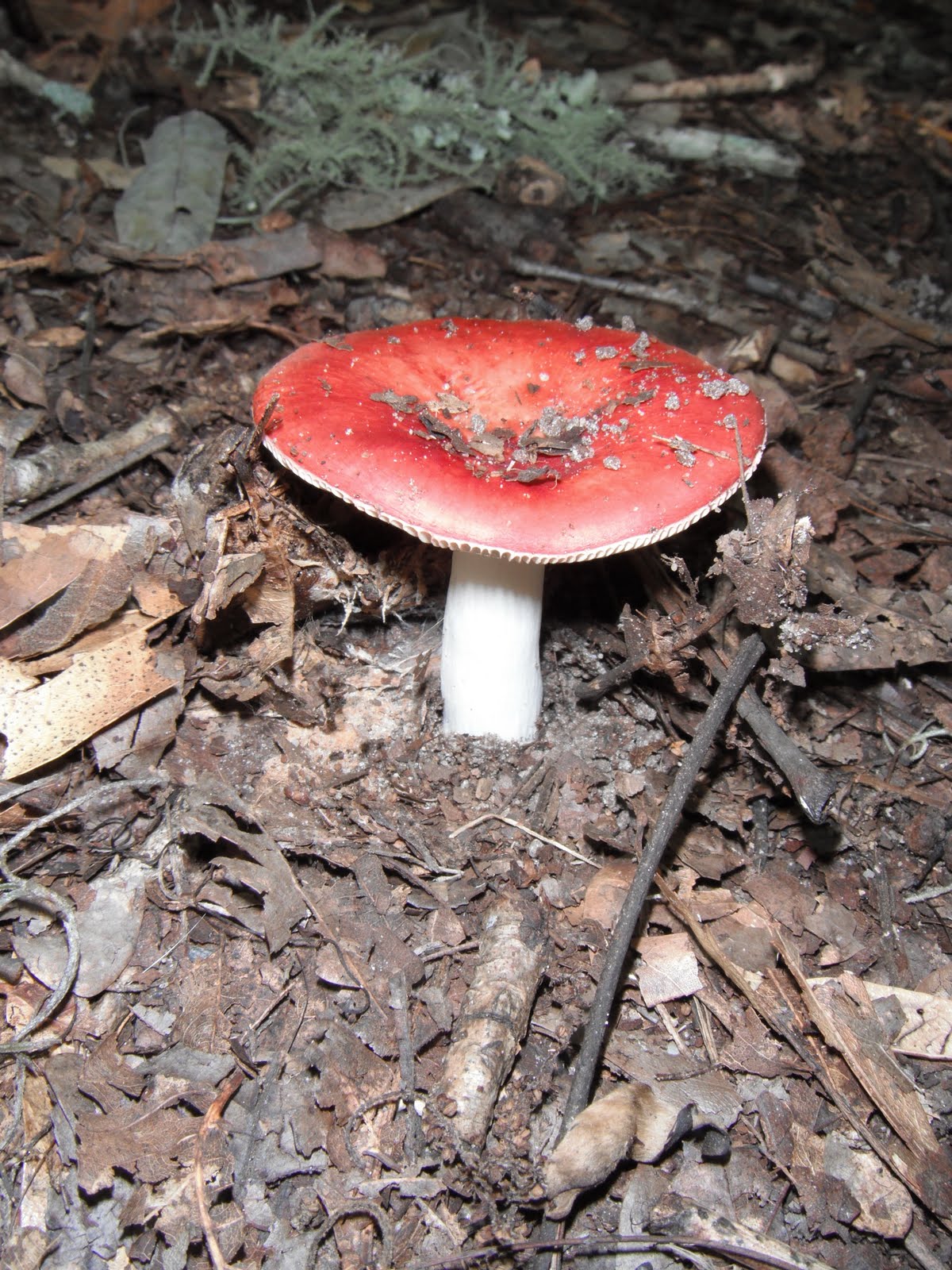
There were also a surprising number of mushrooms about especially given how dry it was. This one looked awesome, it may be a Russula pulchra.

There was also this crazy-looking batch of mushrooms which I am fairly sure are earthstars, or some other puffball type mushrooms. These explode spores out through the top of their body when they get ripe enough. The white ones are unexploded, and the brown one has already released its spores. Probably the best thing that I saw in the park!

Of course what I've learned about Florida is that it is all bugs, and things that eat bugs. We saw our fair share of dragonflies, bees, gnats, and a lot of grasshoppers. We also saw this Golden Orb Weaver, which I had originally seen in the LA Natural History Museum's spider pavilion. It was definitely something to see it in the wild! I though it was from some far away country like Malaysia.

We also saw these awesome beetles. They were quite large, about the size of my thumb, or a little smaller.

The biggest find of the day was this beautiful five lined skink. We saw it near the big dismal sink, where it was hanging out inside the tree.

Of course, I nearly had a heart attack when a big group of people stomped by and scared it away before I could get a picture... But a little patience and it came back again and I got the shot!

Saturday, August 20, 2011

Snorkeling in a hard-bottom gulf community...

Snorkeling in the gulf in a rocky bottom area brought some new animals and some old... The beach itself was more peopled and it was mostly a sandy bottom habitat with a man-made break wall. It was that break wall that was the object of my snorkeling activities.

There were many more types of fish in the rock areas than in the sandy-bottom area that I had previously visited. The rocks provided an excellent surface for algae to grow. Which in turn, provided excellent foraging opportunities for many fish, like these sergeant major fish.


There were also some predatory fish, like the mini-barracuda which I spotted, but did not get a good photo of, and this large sheephead (not to be confused with the California sheephead) with its attendant remora.


There were also some fish that were present in both spots, like flatfish and this toadfish. Although I did not see the toadfish in the sandy-bottom area, I knew it must have been present because I could hear it. It drove me nuts trying to pinpoint the noise coming from this fish. It was so loud that if I was swimming over it, I could feel it vibrate through my body.

There were also many invertebrates, most noticeably crabs. But unlike the sandy-bottom habitat, most of these crabs did not decorate themselves, nor did they bury themselves in the sand. Instead they hid in rocky crevices. You can also see some of the large colonies of compound tunicates in this shot...

There were some snails, which were laying eggs on the rocks...

and some blennies that were living in the holes of the rocks.

Of course there were also some soft corals at the base of the rocks, many compound tunicates, and urchins... But my favorite find of the day was these beautiful jellyfish.


They had a very mild sting, but I did not know that at the time so I kept my distance. If I had known, I probably would have gotten closer. At times, some individuals played host to fish, and I found out that there may have been crabs living in their bell as well.

My final critter of the day was this octopus, which was caught by a fisherman on the break wall. He let it go and I was able to grab this shot before it scuttled off.

Pretty neat, and definitely a higher diversity of fish than in the sandy-bottom area. I can't wait to compare it to a more natural hard-bottom habitat, such as a coral reef habitat!